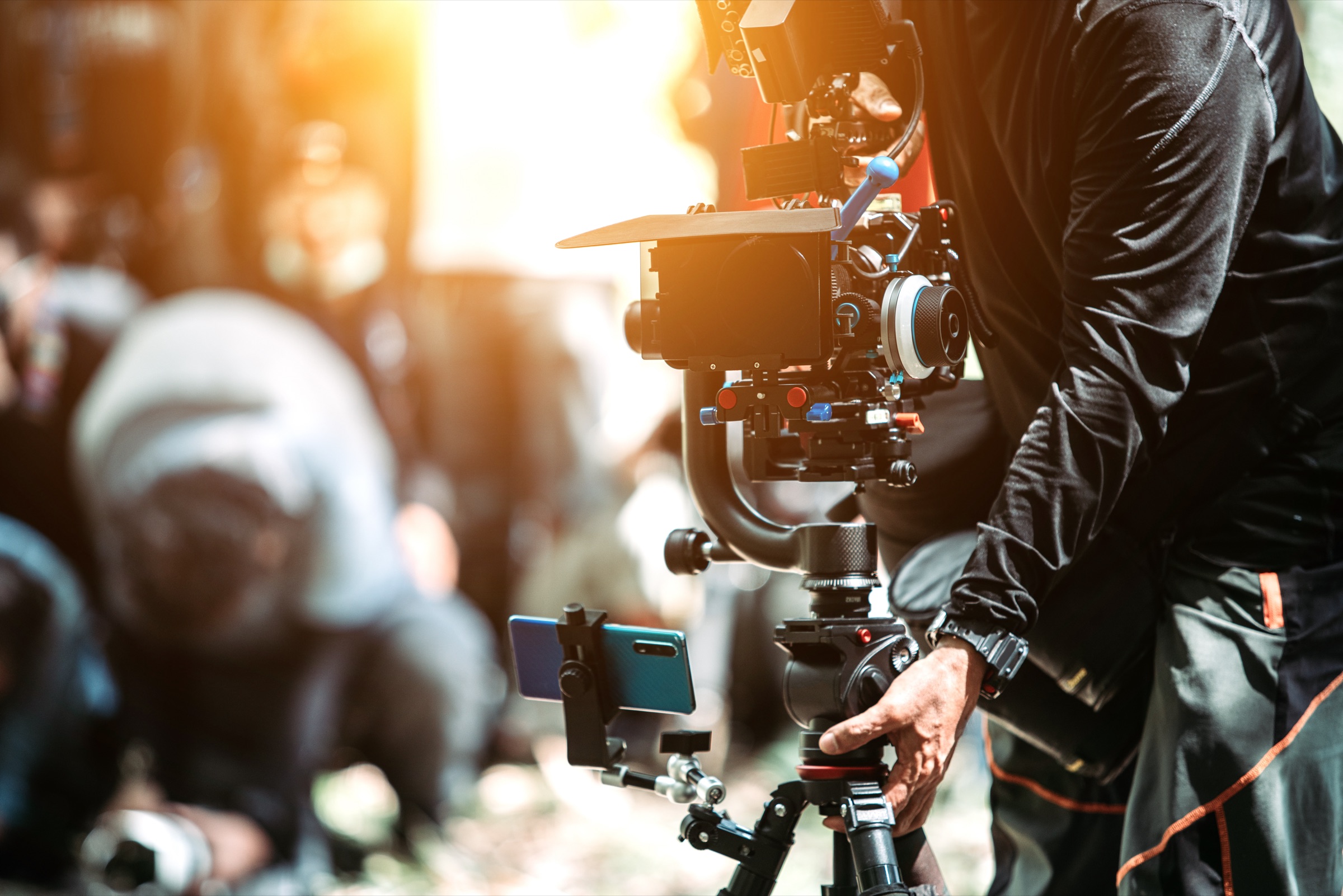
When someone asks us about shooting in New York, the first question is usually “Do we need a permit?” The answer depends on what you bring and where you shoot. On the street, whether the shoot is paid work makes no difference.
What follows is what the city’s Film Office (part of the Mayor’s Office of Media and Entertainment) and the operators of each location say on their official pages as of November 16, 2026. Fees and conditions change, so check the linked originals before you apply.
The Film Office defines a shoot that needs no permit this way. You use only a hand-held camera, a camera on a tripod, and hand-held props or equipment. You do not claim exclusive use of city property. There are no prop weapons or prop vehicles, no stunts, no actors in police uniform, and no request for production parking (Film Office, “When a Permit Is Required”).
Commercial purpose is not one of the conditions. The city’s own explanation, written when the rule was adopted, says that if no vehicles or equipment are used and no exclusive use is asserted, no permit is required (the rule’s explanatory Q&A). An advertising shoot done hand-held and on a tripod, without blocking the sidewalk, can go ahead without a city permit.
The line around “hand-held” is drawn in detail. A Steadicam worn on the body counts as hand-held. Bounce boards and boom mics do not count as equipment as long as someone is holding them. Ladders, lights on stands, camera carts and apple boxes need a permit. So does a slider set on two tripods, because it is treated as exclusive use of part of the sidewalk (Film Office FAQ, Film Office, “When a Permit Is Required”).
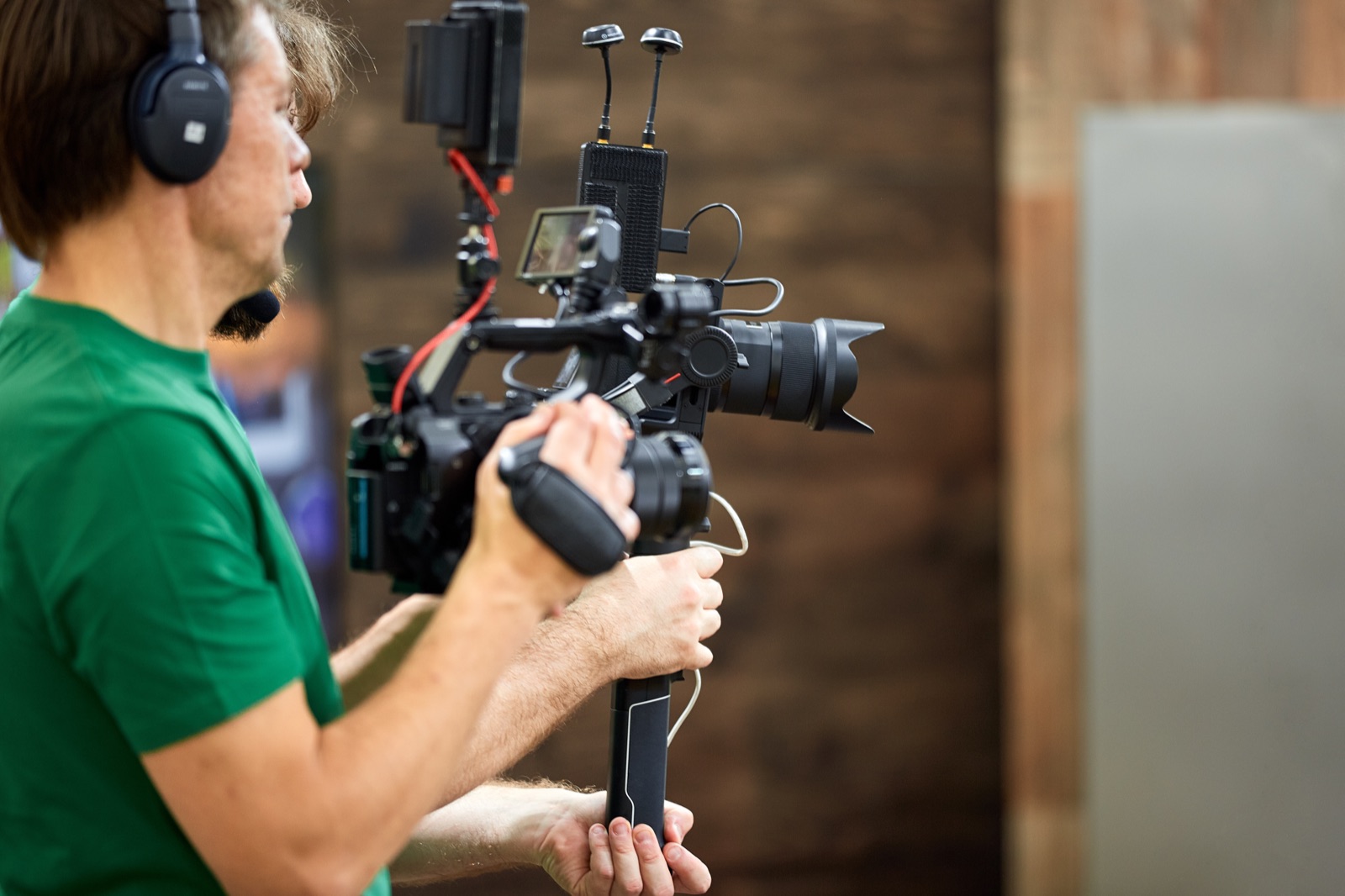
There is no cap on the number of people. You may not block the sidewalk, though. If the sidewalk is 16 feet wide or less, 8 feet must stay clear for pedestrians. If it is wider, half the width must stay clear (Film Office, “Letter in Lieu of Permit”).
Even when no permit is required, a police officer or a security guard may ask. For that moment the Film Office offers a “Letter in Lieu of Permit.” You confirm for yourself that you meet every condition for a no-permit shoot and sign it. There is no application; you print it from the website. It is valid for 30 days (Film Office, “Letter in Lieu of Permit”).
It works only on city sidewalks, pathways in city parks, and the walkways of bridges run by the city’s Department of Transportation. The FAQ explains that city bridges are the ones with no toll, and that the letter cannot be used on MTA or Port Authority bridges, which charge tolls. It cannot be used on private, state or federal property either (Film Office FAQ).
You put equipment such as light stands on the ground. You want parking for production vehicles. You take over a traffic lane or a sidewalk. You use prop weapons or prop vehicles. You stage a stunt. Any one of these means a Film Office permit (Film Office, “When a Permit Is Required”).
There are two costs. The first is the application fee: $500 for each consecutive 14-day period, non-refundable. A one-day shoot still costs $500. The second is insurance: commercial general liability of at least $1 million per occurrence, with the City of New York named as an additional insured. If that is an unreasonable hardship, for example when the premium is more than 25% of the project budget, you can ask for a waiver or a change (Film Office, “When a Permit Is Required”, Film Office, “Insurance Requirements”).
The schedule has an order too. Proof of insurance has to reach the Film Office from your broker at least 48 business hours before your first application. You submit one permit request per shooting day, and the Film Office usually processes requests 72 to 48 business hours before the shoot. Times Square is the exception: submit 7 business days ahead (Film Office, “Application Instructions”).
On penalties for shooting without a required permit, the rule’s explanatory Q&A gives a fine of up to $500, imprisonment of up to 90 days, or both (the rule’s explanatory Q&A).
The two places people ask about most both fall under the city’s rule.
The sidewalks of Times Square are city sidewalks. Hand-held and on a tripod, with room left for pedestrians, a shoot there is treated like one on any other street. What differs is the deadline when a permit is required: here alone it moves up to 7 business days ahead (Film Office, “Application Instructions”).
The Brooklyn Bridge is a toll-free bridge run by the city’s Department of Transportation, as are the Manhattan, Williamsburg and Queensboro Bridges (NYC DOT). Some older advice says you need a separate permit from the office that manages the bridge. Today the Film Office says a shoot with a hand-held camera that claims no exclusive use needs no permit on a bridge walkway either, and it lists the walkways of city bridges among the places where the Letter in Lieu of Permit can be used (Film Office, “When a Permit Is Required”, Film Office FAQ). The rule about leaving room for pedestrians applies on the bridge as well.
In city parks, the Letter in Lieu of Permit covers pathways only. Lawns and other areas are at the park’s discretion (Film Office FAQ). For a shoot big enough to need a permit, you first get the park manager’s approval through the Parks Department’s request form, and then apply to the Film Office. Allow at least five business days for the manager’s reply (Film Office, “Filming in a Park”).
On top of that, the best-known parks tend to be run by separate organizations with separate applications. The Film Office lists Central Park, Brooklyn Bridge Park, the High Line, Bryant Park, Madison Square Park, Prospect Park, Hudson River Park, Battery Park City and Randall’s Island Park (Film Office, “Filming in a Park”). Looking at just three of them shows how much the conditions differ.
Central Park does not ask visitors shooting hand-held or on a tripod for a permit. A commercial shoot needs approval through the Conservancy’s form first, and then a Film Office permit. In nine areas, including Sheep Meadow and Strawberry Fields, no props or lighting may be set up (Central Park Conservancy).
At Brooklyn Bridge Park, permits from the Film Office or the Parks Department do not apply. The park issues its own, on weekdays only, with applications due at least two business days ahead, and it charges site fees. Non-commercial wedding or engagement photos need no permit if the group is 20 people or fewer and uses only hand-held equipment. The page does not say which side a paid photographer falls on, so ask the park (Brooklyn Bridge Park).
The High Line says every film, video and photo shoot needs approval. The limit is 10 people including talent, equipment must be hand-held except for one tripod, and light stands and carts are not allowed. Allow three to five business days for a reply (High Line).
The subway and its stations are MTA property, not the city’s. For personal, non-commercial use with a phone or a small hand-held camera, no registration or fee is needed. Lights, reflectors and tripods need MTA approval (MTA).
Unlike the street, here it matters whether the shoot is commercial. The MTA counts movies, television, advertising and sponsored social media posts as commercial, and requires a location agreement or a permit for all of it. That includes a shoot with a single hand-held camera. It says to allow at least three weeks for a location agreement. Grand Central Terminal has a short-form permit for small shoots, which takes ten days to process (MTA).
Liberty Island and Ellis Island are managed by the National Park Service. The rules for national parks changed with a law passed in January 2025. A group of eight or fewer that uses only hand-carried equipment, does not need exclusive use of a site, and meets the other listed conditions needs no permit, commercial or not (National Park Service). A shoot outside those conditions applies at least ten business days ahead. The application fee is $75 and non-refundable, and insurance and location fees may be added (National Park Service, Statue of Liberty).
The Film Office covers only outdoor public property owned by the city. The inside of a store or an office is outside it, and so is a plaza that looks public but is privately owned; the city’s letter cannot be used there (Film Office FAQ). If you want to shoot in the plaza in front of a building or inside a shopping complex, ask the property manager first.
Observation decks are private property too. The Empire State Building, for example, lists professional camera equipment and stands such as tripods and monopods among the items you may not bring in (Empire State Building FAQ).
Since July 2023, taking off or landing a drone in the city requires a permit from the NYPD. You apply at least 30 days before the first flight. The fee is $150 and non-refundable. The operator needs an FAA Remote Pilot Certificate (Part 107), and the insurance must name the city as an additional insured (NYPD FAQ).
Parks are a separate matter. Central Park, Brooklyn Bridge Park and the High Line all say drones are prohibited (Central Park Conservancy, Brooklyn Bridge Park, High Line). The Film Office FAQ, for its part, still says drone use is prohibited in the five boroughs, which does not match the NYPD’s guidance. If you plan to fly, confirm directly with the NYPD.
The Film Office asks international productions to get in touch at least one month before the trip. What takes time is less the permit than visas and equipment. According to the Film Office, commercial or entertainment projects generally need an O, P or H visa, and before that an approved petition (Form I-129). Equipment comes in on an ATA Carnet obtained in your own country, or through a customs broker as a temporary import. The Film Office also checks whether a foreign insurer’s policy meets its requirements (Film Office, “International Productions”).
Which visa applies depends on the shoot and on who is traveling. The Film Office itself suggests hiring an immigration attorney.
Handing the shoot to a local photographer or crew cuts the number of people who travel and the equipment you carry in. The team in Japan concentrates on planning and review, and the work on location is run locally.
Start with who owns the place you want to shoot: a city sidewalk, a park, a station, or private property. That decides which office you deal with. Next, ask whether the shoot can be done hand-held and on a tripod. If it can, print the Letter in Lieu of Permit and bring it. If it can’t, put insurance, the application fee and the lead time into the budget and the schedule. Deciding in this order means fewer offices turn up later.
Super Sonic Design does photography and videography in New York. Rates are in the pricing section of our service page. To talk with us about a shoot, use the contact form. For location ideas, see our 20 photo spots in New York.
 Java4Shell: Which Java Servers Are Actually at Risk11/18/2026
 The Outlook Flaw: What Was It, Really?11/15/2026
 Node.js Fixes 16 Vulnerabilities: What to Patch First in the November 11, 2026 Security Release11/11/2026
 Checking Your Own Website's Security: What to Confirm First, with Free Tools11/8/2026
 How Do You Notice Your Site Has Been Hacked? Common Signs, and the Monitoring to Set Up in Advance11/8/2026
 When You Find Your Site Has Been Hacked: What to Do, and Not Do, in the First 24 Hours11/8/2026


43 W 33rd St, #202, New York, NY 10001
Phone: +1 (848) 281-7853
Email: info@supersonicdesign.com


